
 +2.08%


 -2.07%


Category: Uncategorized
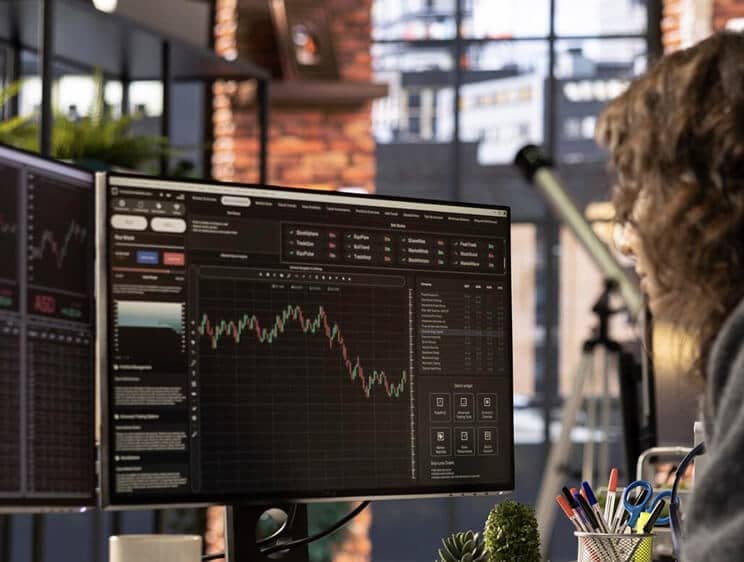
How Market Analysis Tools Can Help Traders Make More Informed Decisions
Financial markets move quickly. Prices change, market conditions shift, and new information can affect different assets throughout the trading day. For traders, keeping track of all this information manually can be difficult.
That is where market analysis tools can be useful.
Rather than relying on a single chart, indicator, or piece of information, traders can use analysis tools to organize market data, examine price movements, monitor different assets, and better understand the conditions surrounding a potential trade.
The important point is that these tools are designed to support analysis, not predict the future or remove the risks involved in trading.
What Are Market Analysis Tools?
Market analysis tools are software-based resources that help traders examine financial markets and organize relevant information.
Depending on the tool, traders may be able to study:
- Price movements
- Market trends
- Different financial assets
- Technical indicators
- Market conditions
- Portfolio information
- Risk exposure
For someone following several markets at once, having this information organized in one place can make the research process easier to manage.
Why Is Market Analysis Important?
Good trading decisions start with understanding the market being considered.
Market analysis can help traders examine what has already happened, identify current conditions, and consider different factors that may affect an asset.
For example, a trader researching a particular market may want to look at its recent price movement, broader market conditions, and potential risk before deciding what to do next.
Analysis does not guarantee that a decision will be correct. Markets can behave differently from expectations, which is why research and risk management need to work together.
Common Types of Trading Analysis Tools
Different tools serve different purposes. Some focus on price data, while others help traders monitor markets or manage risk.
Charts and Price Data
Charts provide a visual way to examine historical and current price movements. They can make it easier to identify changes in direction, periods of volatility, and other patterns in market data.
Technical Indicators
Technical indicators use price or other market data to provide additional information about market conditions. Traders may use them as part of a broader analysis process rather than relying on one indicator alone.
Market Monitoring Tools
When traders follow multiple assets, market monitoring tools can help them keep track of changes across different markets.
This can be particularly useful when watching currencies, shares, commodities, digital assets, or indices.
Risk Management Tools
Analysis is only one part of trading. Understanding potential risk is equally important.
Risk-management tools can help traders assess factors such as position size, potential exposure, and other aspects of a trading plan.
Using Several Sources of Information
One of the limitations of relying on a single tool is that it only provides one view of the market.
A more structured approach can involve looking at several types of information, including:
- Price data — what the market has been doing.
- Technical analysis — indicators and chart-based information.
- Fundamental information — economic or company-related factors where relevant.
- Market conditions — broader developments affecting the market.
- Risk information — the potential downside associated with a decision.
The goal is not to collect as many indicators as possible. More information does not automatically mean better analysis.
Instead, traders should understand what each tool actually tells them and use information that fits their research process.
Avoiding Common Mistakes With Trading Tools
Trading technology can make analysis more convenient, but it can also create problems when used without a clear process.
Some common mistakes include:
- Following every market signal
- Using too many indicators at once
- Treating an indicator as a guaranteed prediction
- Ignoring risk management
- Making decisions based on short-term market noise
- Allowing emotions to replace research
A tool should support a trader’s analysis rather than become a substitute for it.
How DRSTOCK Supports Market Research
DRSTOCK provides access to trading and market-analysis tools designed to help users explore financial markets and organize their research.
The platform covers areas including currencies, shares, commodities, digital assets, and indices, alongside educational resources and risk-management tools.
For traders who want to develop a more structured approach to market research, exploring the available tools and educational resources at drstock.net can be part of that process.
The Role of Experience and Education
Technology can provide information, but understanding that information still matters.
New traders can benefit from learning how different markets work, understanding the limitations of technical tools, and developing a consistent approach to research.
Education is particularly important because market conditions can change. A strategy or indicator that appears useful in one situation may not produce the same result in another.
Final Thoughts
Market analysis tools can make it easier to organize information, monitor financial markets, and examine price movements. They can also support risk-management and research processes.
But no tool can remove uncertainty from financial markets.
The most useful approach is to treat technology as one part of a broader process that includes research, education, risk awareness, and careful decision-making.
FAQ
1. What are market analysis tools?
Market analysis tools are software-based resources that help traders examine market data, price movements, trends, indicators, and other information.
2. Can market analysis tools predict market prices?
No tool can reliably guarantee future market movements. Analysis tools provide information that traders can use as part of their research.
3. What types of markets can traders analyze?
Depending on the platform, traders may analyze currencies, shares, commodities, digital assets, and market indices.
4. Are technical indicators enough to make a trading decision?
Technical indicators are one source of information. Traders may also consider broader market conditions, relevant fundamental information, and risk.
5. How can DRSTOCK help with market analysis?
DRSTOCK provides trading and market-analysis tools covering areas such as currencies, shares, commodities, digital assets, and indices, along with educational and risk-management resources.
Disclaimer: The information provided by DRSTOCK (drstock.net) is for educational and informational purposes only and should not be considered financial, investment, legal, tax, or professional advice. All investments involve risk, including the potential loss of principal. Readers should conduct their own research and consult qualified professionals before making financial decisions. Past performance does not guarantee future results.
Suggested Internal Linking Opportunities
- Trading Tools → DRSTOCK tools page
- Market Insights → DRSTOCK market/insights section
- Risk Management → DRSTOCK risk-management resources
- Educational Resources → DRSTOCK education section
- Packages → DRSTOCK packages page
Suggested Keywords:
market analysis tools, trading analysis tools, trading tools, financial market analysis, technical analysis tools, market research tools, trading education, risk management tools
Understanding Global Markets: Currencies, Stocks, Commodities, Crypto and Indices
SEO Title: Understanding Global Markets: Currencies, Stocks, Commodities, Crypto and Indices
Meta Title: Understanding Global Financial Markets
Meta Description: Explore currencies, stocks, commodities, cryptocurrencies and indices, and learn how these major financial markets differ.
Primary Keyword: global financial markets
Secondary Keywords:
- global markets
- financial markets
- forex market
- stock market
- commodities market
- cryptocurrency market
- market indices
- financial market analysis